Position:
Home > FAQ
FAQS
We have our own brand, and the products has passed the ISO9001 quality system and CE certification, and all the equipmentfittings are famous brand in China.
Choose 316 stainless steel material to create a corrosion-resistant linear screen solution
In the process of screening phosphate, the corrosiveness of salt materials is a problem that needs attention. In order to solve this challenge, we recommend the use of 316 stainless steel to provide corrosion-resistant linear screen solutions to Egyptian customers. Here are some key points about our approach:

Material selection: In order to cope with the corrosiveness of salt materials, we choose to use 316 stainless steel as the material of the part of the linear screen that contacts the material. 316 stainless steel has excellent corrosion resistance and has good resistance to corrosive materials such as phosphates. This will extend the life of the equipment and reduce maintenance and replacement costs.
Screening efficiency: Our linear screen uses advanced screening technology to efficiently screen phosphate and remove fine materials below 1 mm. This helps improve the quality of the finished product and ensures that the product meets customer requirements.
High-capacity configuration: In order to meet the customer's production needs, we have configured 5 linear screens for you, and the output of each is expected to be around 12t/h. Through the combined use of multiple devices, you can achieve a high production capacity of 50t per hour and improve production efficiency.
Our corrosion-resistant linear screen solutions will help Egyptian customers increase screening efficiency, improve product quality, and reduce equipment maintenance and replacement costs. We are committed to providing customers with reliable screening equipment and professional technical support. If you are interested in our options or have any questions, please feel free to contact our team and we will be happy to assist you.
Can a screw conveyor convey carbon black powder?
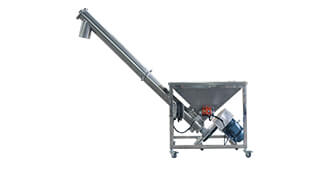
Yes, screw conveyors can be used to convey carbon black powder. Screw conveyors are a common material conveying equipment that conveys materials from one place to another through the rotation of a screw. It is suitable for conveying powdered, granular and bulk materials, including carbon black powder.

The working principle of a screw conveyor is to push or extract materials through a spiral blade. The spiral blade rotates around the central axis and moves the material along a spiral channel. During the conveying process, the spiral blade creates a pushing and stirring action to ensure continuous conveying of the material.

For fine powder materials such as carbon black powder, a properly designed screw conveyor can be selected for conveying. In order to ensure the effectiveness and safety of conveying, the following points need to be considered:

Material selection: Select a material suitable for conveying carbon black powder, usually stainless steel or wear-resistant materials to ensure compatibility and durability with the material.
Spiral shape and size: Select a suitable spiral shape and size according to the characteristics of carbon black powder and conveying requirements. The diameter, pitch and blade shape of the spiral will affect the conveying capacity and efficiency.
Dust prevention measures: Since carbon black powder has high dust-raising properties, appropriate dust prevention measures need to be taken, such as installing sealing devices, closing the conveying lines, etc., to reduce the impact of dust on the environment and operators.
Cleaning and maintenance: Clean the screw conveyor regularly to prevent accumulation and blockage to ensure its normal operation and long-term use
Is the screw conveyor easy to disassemble?

In the field of powder and granular material transportation, the screw conveyor has become the industry's first choice due to its unique advantages. Dayong Machinery has accumulated 15 years of technology and will analyze the core value of screw conveyors for you:
Six core advantages
Enclosed dustproof
→ Fully enclosed pipeline design, dust overflow is 0, meeting the strict requirements of GMP/environmental protection
Flexible layout
→ Horizontal/inclined (0-30°)/vertical multi-directional transportation, adapting to complex plant space
Wear-resistant and durable
→ Blades and troughs are made of 304 stainless steel or wear-resistant alloy, with a service life of more than 100,000 hours
Energy-saving and efficient
→ Energy consumption is reduced by 60% compared to pneumatic conveying, and the conveying capacity can reach 100m³/h (supporting variable frequency speed regulation)
Easy maintenance
→ Modular design, quick-detachable blades, replacement only takes 30 minutes
Strong compatibility
→ Suitable for 500+ materials such as flour, cement, plastic particles, etc., without graded mixing
Dayong Machinery Customized Solution
▸ Provide integrated solution of screw conveyor + vacuum feeder + storage silo
▸ Non-standard customization: length (1-40 meters), pipe diameter (100-600mm), inclination angle can be designed on demand
Get exclusive solutions now!
High frequency screen maintenance
1. When the equipment is operating normally, the feeding situation of the sieve should be frequently observed, and the frequency of feeding should be increased or decreased in a timely manner in order to improve the classification efficiency.
2. Because the screen has high classification efficiency, good dehydration performance, and high concentration of the screen volume, the fluidity of the slurry in the screen volume chute is poor and should be equipped with a water pipe.
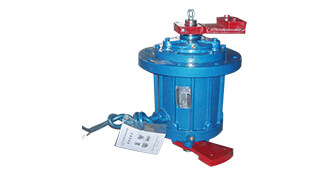
3. The motor and control box must be strictly protected from water to avoid short circuit. The vibrator should be covered with a rubber plate to prevent water and slurry from falling in, causing short circuit and blocking the air gap.
4. Check at any time whether the bolts in various parts are loose and whether the screen frame collides with the chute, etc.
5. The excitation current and amplitude can be adjusted according to the requirements of on-site operations. Achieve different screening effects.
How to clean the limestone standard inspection sieve?
Clean according to the actual situation. The remaining dust particles should be scrubbed with a soft brush first. Special residues should be washed with dilute acetic acid. If it is a metal frame or copper wire mesh test sieve, a special cleaning agent should be used.
The specific steps for cleaning the test sieve are as follows:
1. Turn off the power of the standard inspection sieve.
2. Loosen the fixing nuts at the two corners, remove the upper cover of the test sieve, and remove the sieve frame to be cleaned.
3. Use a vacuum straw and a rag to clean the remaining parts of the standard test sieve.
4. Use compressed air to clean the particles and powder on the screen. If the particles or powder are stuck in the screen holes and cannot come out, you can tap the screen lightly.
5. Install the small hole screen, large hole screen and upper cover in order.
6. Pack up the tools used when cleaning the standard inspection sieve and clean it.
Please note! When cleaning, do not press too hard on the grid to remove stuck particles, nor should you use sharp objects to clear blockages. To prevent the mesh from breaking.
The difference between swing screen and rotary vibrating screen:
1. The working principle of the swing screen is different from that of the rotary vibrating screen.
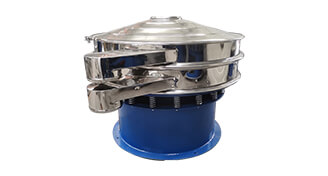
From the perspective of running trajectory, the swing screen is a nonlinear inertial vibrating screen, and its basic rotary motion is similar to manual screening. The material is evenly dispersed on the entire screen surface from the center to the outer edge, thereby spreading in the axial direction in a spiral motion. The fine particles thus complete the entire screening process. The rotary vibrating screen is a screening machine that performs three-dimensional circular motion, so the production sites required by the two screening machines are also different.
2. Different production output
If you want large output, it is recommended that you use a swing screen. If you want high precision, you need to use a rotary vibrating screen. This is because the area of contact between the screen surface of the swing screen and the material is large, while the usable area of the rotary vibrating screen is smaller. A larger contact part between the screen surface and the material will effectively increase the product throughput, while a small contact part will effectively improve the screening accuracy.
3. Screening accuracy is different
Since the rotary vibrating screen performs three-dimensional motion, and the operation mode of the swing screen determines that the effective screening area is doubled, the screening accuracy can reach more than 95%.
4. Impact on raw materials
There is no doubt that the rotary vibrating screen uses the principle of vibration to screen materials. Due to the vibration, the appearance of the materials will be destroyed. Therefore, many granular crystalline and brittle materials are not suitable for screening by the rotary vibrating screen, such as chicken essence and rotary vibrating screen. MSG, sugar, cooked food, etc. The swing screen has a slight elliptical swing motion, does not use vibration, has little impact on the raw materials, will not damage the material shape, and further improves the material output rate.
5. There is a big price difference between the swing screen and the rotary vibrating screen.
As a standard product in screening equipment, rotary vibrating screens have been produced for decades. The technology is mature and the supporting equipment is complete, so the price-performance ratio is very high. As a new product, the swing screen is relatively complicated to make and the supporting equipment is not perfect, so the price is generally several times higher than that of the rotary vibrating screen.
 1 2 3 4 5 6 7 8 9 10 
welconme
your inquiry
Copyright © Xinxiang Dayong Vibration Equipment Co., LTD.
Technical Support: COVERWEB